Cultura y noticias hispanas del Valle del Hudson
Thinking About Buying an Electric Bike?
What You Need to Know in the Hudson Valley
Por Andrés Pacheco-Girón
November 2026New York State’s roads are decorated with orange, yellow, and red leaves, marking the beauty of autumn and the increasingly near arrival of winter. The cold, among other things, means we may see fewer cyclists on the streets of the Hudson Valley. But if spring, summer, and fall 2026 have taught us anything, it is that we should think carefully before giving an electric bicycle to a minor as a holiday gift.
According to data from roadside assistance company AAA Northeast, electric bicycle accidents have increased significantly across the country. In the Hudson Valley, electric bikes have been making headlines in major local newspapers following a series of traffic accidents involving them. For example, in September of this year in Kingston, two young people were airlifted to a hospital after the electric bicycle they were riding collided with a car. That same month in Poughkeepsie, a 35-year-old man riding an electric bicycle died after being struck by a pickup truck.
Now, this does not mean that electric bicycles are dangerous in and of themselves. In fact, for many people, they are their primary means of transportation when their budget cannot cover the cost of buying a car and they cannot rely entirely on public transportation in the region.
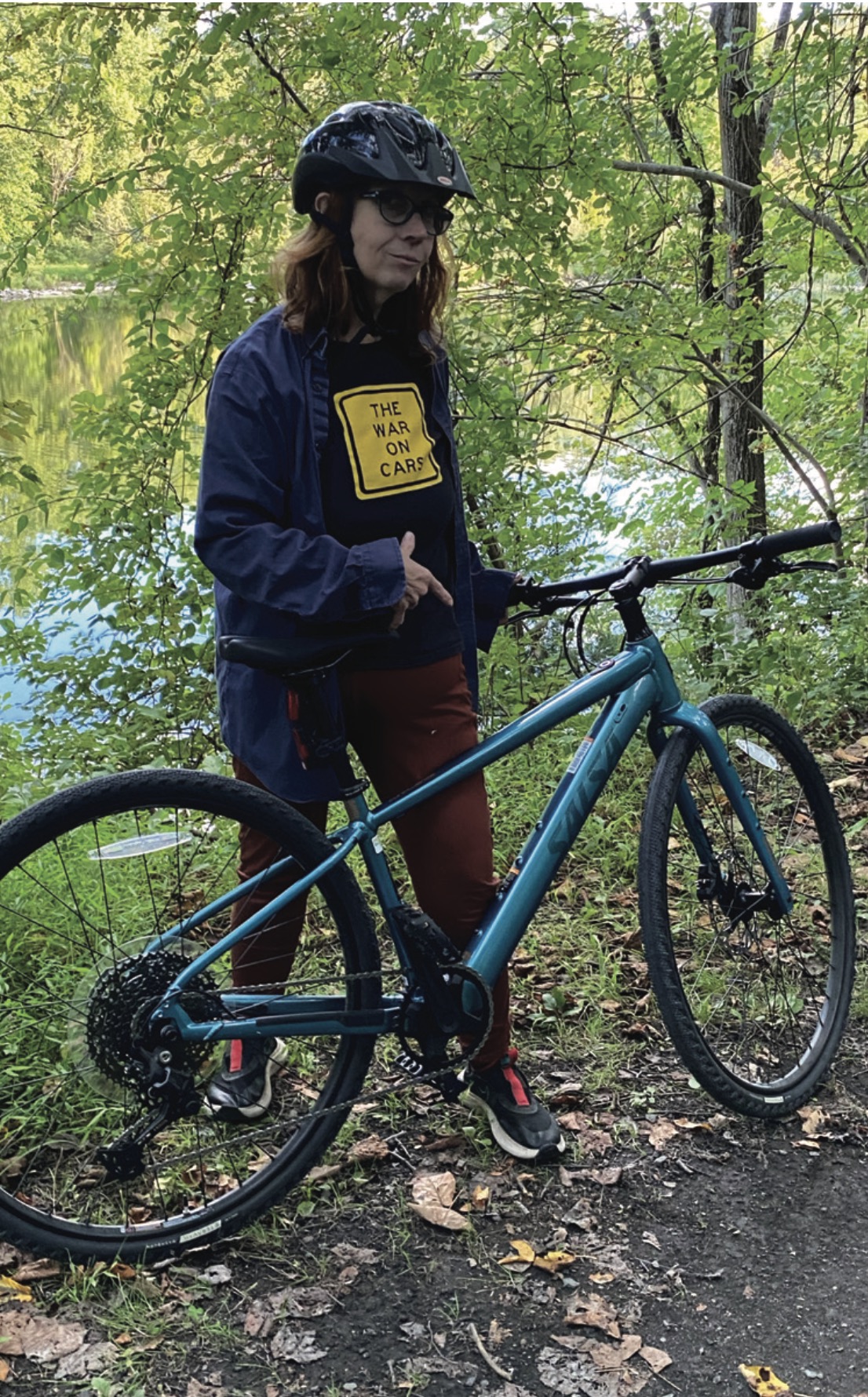
In an interview on La Voz con Mariel Fiori on Radio Kingston en Español, cycling rights activist Rosemary Quinn explains that she lives with a disability: “My legs have gotten weaker over the years. So having that little boost from the motor when I’m going up a hill makes a huge difference.”
For Quinn, regulating the use of electric bicycles can be dangerous because, as she puts it, “We don’t want to overreact. We don’t want laws like the ones in New Jersey, where every electric bike rider has to register their bike.” She adds that “it’s important for people with low incomes to be able to access these vehicles easily.”
Quinn explains that the laws in New York State “are very similar to the ones already in place for regular bicycles, with a few exceptions, such as the three classes of electric bicycles.”
In late July, following recent tragic deaths in New York City, Attorney General Letitia James reminded New Yorkers in a statement that marketing and selling vehicles such as “electric bicycles” or “electric scooters” that exceed the state’s speed or power limits for those vehicles is a violation of New York law.
Under New York law, electric bicycles must have an electric motor of less than 750 watts and fall into one of three categories:
Class 1: Pedal Assist, Up to 20 Miles Per Hour
If you have visited New York City and seen the gray Citi Bikes that New Yorkers ride through the streets of Central Park, those are Class 1 bicycles. They operate with a motor that receives power only when the rider is pedaling. Without pedaling, the motor does not provide power. Under New York State law, these bicycles can reach speeds of up to 20 miles per hour. Riders must be at least 16 years old, and helmets are not required, although wearing one at all times is strongly recommended.
Class 1 electric bicycle riders may travel on paved streets with speed limits of 30 miles per hour or less, bike lanes, and even paved trails such as the Empire State Trail. Riding on pedestrian sidewalks is prohibited.
Class 2: Throttle, Up to 20 Miles Per Hour
Unlike Class 1 bicycles, Class 2 electric bicycles have a throttle that operates independently of the pedaling system. This throttle is generally controlled by a mechanism on the handlebars. When activated, it sends power directly to the bicycle’s wheels, meaning the rider does not need to pedal for the electric assistance to work. However, these bicycles can only reach speeds of up to 20 miles (32 km) per hour. As with Class 1 bicycles, riders must be at least 16 years old, and helmets are not required, although wearing one at all times is strongly recommended.
As with Class 1 bicycles, Class 2 electric bicycle riders may travel on paved streets with speed limits of 30 miles per hour or less, bike lanes, and even some paved trails such as the Empire State Trail. Riding on pedestrian sidewalks is prohibited.
Class 3: Throttle, Up to 25 Miles Per Hour; Prohibited Outside New York City
Class 3 is the category that particularly concerns authorities in the Hudson Valley and throughout New York State. According to Kingston Mayor Steve Noble, rather than bicycles, these vehicles “are electric motorcycles and have particularly powerful batteries that can reach speeds of over 30 miles per hour. Electrically assisted bicycles are completely legal, fun, and help people in communities like ours, where there are many hills, get around. The real problem is bicycles that can go faster than 25 (40 km/h) or 28 miles per hour.”
Class 3 bicycles are prohibited on all roads in New York State, with the exception of New York City. Until recently, Noble explains, anyone could buy Class 3 electric bicycles on Amazon. However, “the
companies selling them avoided penalties by saying they were intended for off-road use. Sure, but what’s the first thing you do when you buy a bicycle on Amazon? You take it out on the road and start using it. And this has caused a lot of problems for many cities throughout New York State,” Noble explains.
Since mid-August, New York State has persuaded Amazon to stop shipping Class 3 electric bicycles to the state, where their use on roads outside New York City is prohibited, regardless of the rider’s age.
The Attorney General’s Office explained that two-wheeled electric vehicles traveling above those speed limits are not considered electric bicycles or electric scooters under New York law. They may instead be electric motorcycles, mopeds, or motorcycles, which are subject to additional requirements for registration through the DMV, licensing, and insurance. New Yorkers are encouraged to file complaints (ag.ny.gov/file-complaint) with the Office of the Attorney General (OAG) about companies that endanger New Yorkers by illegally selling these vehicles while falsely labeling them as electric bicycles and electric scooters.
However, if you already own a Class 3 bicycle and ride it in New York City, the law states that riders must be at least 16 years old, must wear a helmet, and may not ride these bicycles on paved trails, unlike Class 1 and Class 2 bicycles.
Cycling activist Rosemary Quinn says, “We want to be very careful and make sure that Categories 1 and 2 are protected. Because we want to encourage their use, not make people stop using them.”
Under New York law, children under 16 may not operate any electric bicycle, nor may they operate or ride as passengers on any electric scooter. Electric scooter riders who are 16 or 17 years old must wear helmets, and riders of any age must wear helmets on Class 3 electric bicycles. Violating the law can result in fines of up to $50.
For now, winter may cool the discussion about regulating this type of bicycle. But hopefully, it will also be a time for cyclists across the state to reflect on how to follow the law in order to protect themselves and
the other people who share the roads. And if your 12-year-old asks for an electric bike for Christmas, saying, “I want one because all my friends have one,” you already have an answer: in New York, the law does not allow it.
What Are Electric Bicycles and Electric Scooters?
Electric Scooter (E-Scooter): A type of device with handlebars, a floorboard or seat, and an electric motor that can be propelled by the electric motor and/or human power. E-scooter users are granted all the rights and are subject to all the duties that apply to bicycle riders.
Electric-Assisted Bicycle (E-Bike): Various classes of bicycles equipped with an electric motor and operable pedals. An electric-assisted bicycle cannot be registered as a motorcycle, limited-use motorcycle, moped, or all-terrain vehicle, and it does not have the same equipment. Electric bicycle users are granted all the rights and are subject to all the duties that apply to the operator of a motor vehicle.
SOURCE: New York State Office of the Attorney General
back to top
COPYRIGHT 2026
La Voz, Cultura y noticias hispanas del Valle de Hudson

Comments | |
| Sorry, there are no comments at this time. |