Cultura y noticias hispanas del Valle del Hudson
Make Them Pay: Ten Voices Defending Territory in Latin America
Por Cristina Ramírez
March 2026“Speaking out is a huge risk that can cost us our lives every day”, says Norka Pareja, a Wayuu community leader from La Guajira, Colombia. Her community has been displaced by the El Cerrejón coal mine, which has operated for over 40 years uses around 35,000 liters of water per day in a region where thousands of people lack sufficient access to water. “It costs us kidnappings and displacement from our territories…… but spaces like this documentary allow us to share experiences, strategies, and strengthen support networks,” she adds. Wayuu communities continue to speak out about water scarcity and the impacts of El Cerrejón, with reports from Amnesty International and company statements confirming the persistence of these issues, ongoing protests, and the need for protection guarantees for leaders like Norka Pareja.
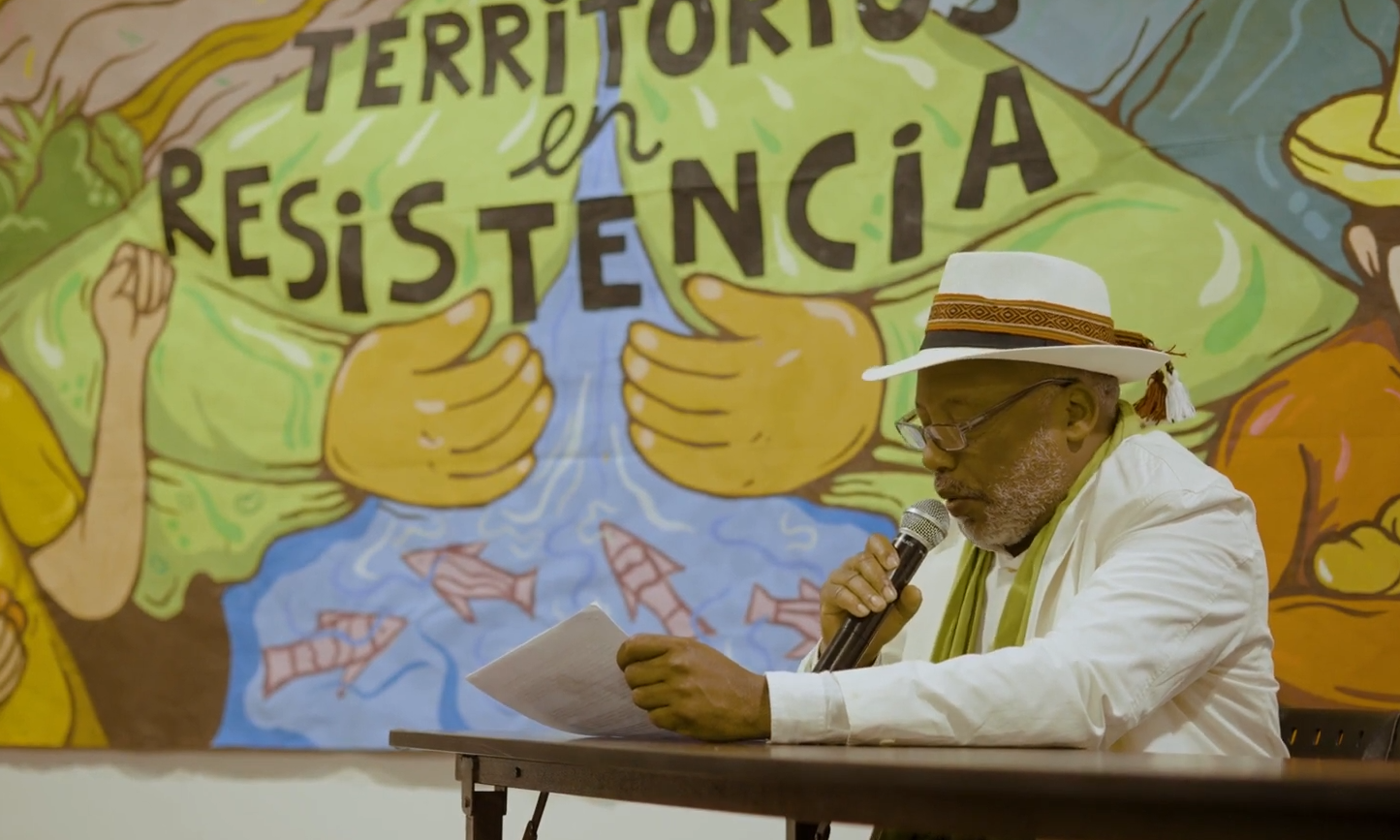
This is one of the testimonies featured in the short documentary “Make Them Pay: Ten Voices Defending Territory in Latin America,” produced by the Latin American Make Big Polluters Pay campaign of the international organization Corporate Accountability, known in Spanish as Alto al Poder Corporativo (corporateaccountability.org).
Nathalie Rengifo Álvarez, campaign director for Latin America, said on the Radio Kingston program La Voz con Mariel Fiori that Corporate Accountability works “to return power to where it belongs: to the people, not corporations.” Through campaigns focused on food, water, tobacco, and climate, the organization works to raise awareness of these issues and challenge corporate influence in multilateral decision-making. “The fox shouldn’t be guarding the henhouse,” Rengifo Álvarez said, referring to the role of corporations responsible for the climate crisis in international negotiations.
The documentary was developed during a meeting of members of the Make Big Polluters Pay Latin America campaign, held in Lima, Peru, in 2023. Filmed there, the documentary presents ten stories of social, land, and environmental struggles—mainly against pollution and extractivism—told in the voices of the people leading these movements in their own territories.
THE STORIES
In Brazil’s Bajo Tapajós region, Vandria Borari, from the Indigenous women’s collective Coletivo de Mulheres Indígenas As Karuana, describes the expansion of soybean plantations into the rainforest and Indigenous territories. “The forest is cleared to make way for soybean fields,” she says. She reports aerial spraying that causes respiratory problems, water contamination, and forces communities out of their lands, where they lose animals, fruit trees, and medicinal plants. The collective and reports from Agência Pública continue to document the spraying and the loss of land in the region, which affects both ecosystems and Indigenous communities.
In Neuquén, Argentina, Lef Nawuel, from the Mapuche Confederation, says that fracking (hydraulic fracturing to obtain “natural” gas) has deepened a historical crisis: “It’s like scraping the bottom of the barrel,” he says. He points out that there are more than 2,000 active oil wells, while much of the population faces poverty and lacks access to energy, housing, and healthcare. The Mapuche Confederation of Neuquén continues legal action and protests against new fracking wells, highlighting cumulative damage, according to Página/12, in the context of the region’s oil expansion.
In Bolivia’s Oruro region, Margarita Aquino, from the National Network of Women in Defense of Mother Earth (RENAMAT), describes displacement caused by mining-related pollution. “If you had everything before and suddenly the multinational moves in, it feels like you’ve lost it all,” she says. Her husband works in one of the mines in the region, which also creates painful family tensions: “We hurt each other with words; sometimes he is defending his job, and we are defending Mother Earth.” Recently, RENAMAT has warned about ongoing environmental impacts from mining and the need for stronger regulation, as El Deber reports on water contamination in local communities.
In the Peruvian Amazon, Walter Cuñachi, from the Chiriaco community, reports that pipelines have been laid across his territory without prior consultation, with rusting pipes that rupture, contaminating the river. “We are all contaminated,” he says, challenging the official narrative that downplays health impacts. Awajún communities are seeking medical care and environmental remediation, while the National Coordinator for Human Rights and reports from IDL-Reporteros emphasize the need for independent monitoring in the area.
In Chile’s Biobío region, Silvana Ceballos, from the Forest Model Reform Network, says that the expansion of pine and eucalyptus monocultures has replaced native forests and significantly reduced water supplies. After wildfires destroyed large areas of these plantations, they saw springs and streams return or swell, reinforcing their belief that monocultures absorb water and deprive rural communities of it. The network is involved in legislative discussions on forest management.
In Guatemala’s Escuintla region, a defender—whose identity is protected for security—describes the impacts of monocultures of sugarcane, banana, African palm, and rubber. She reports on the diversion and pollution of rivers, aerial spraying that affects workers and communities, and a climate of criminalization against those defending their land, particularly women leaders. Recently, peasant organizations have reported new spraying, and reports from Plaza Pública document the social and environmental, as well as health, impacts for communities.
Cases That Taste Like Victories
Not every story ends the same way. In Guanabara Bay, Brazil, Alexandre Anderson, from AHOMAR, explains how fishing has declined due to oil development: “In my grandparents' time, there was plenty of fish; today we fish every day and catch very little.” However, he says that in recent years they were able to establish the first oil exclusion zone in Magé, Rio de Janeiro: “We decided not to succumb to sadness… today we are happy because we are protecting what belongs to us” (ahomar.org.br)
In the Ecuadorian Amazon, Jayro Salazar, from the Union of People Affected by Texaco/Chevron (UDAPT), recalls that more than 50 years ago the government leased over a million hectares for oil extraction. After a favorable ruling against Chevron in Ecuadorian courts, compensation is still being disputed. However, Jayro says that the transformation of the relationship between communities and the oil industry is evident: from consent bought with material incentives to a form of resistance that serves as a model for other Latin American movements. UDAPT continues to document impacts and promote community participation in environmental remediation and social justice efforts (udapt.org).
In Monte Plata, Dominican Republic, Darío Solano, from REDAFROS, describes how his community prevented the construction of a mine tailings dam that threatened the Sama River basin, which provides water to over three million people in Greater Santo Domingo. Although the project met formal requirements, it did not obtain a social license. “Small victories must be shared,” he says, noting that information and collective memory are part of their resistance. REDAFROS continues to raise awareness and foster community monitoring of the Sama River.
For Nathalie Rengifo, the objective of the documentary is clear: to show that “we should not feel isolated or alone.” Sharing these stories is not only an act of solidarity but also a recognition that, for many indigenous and rural communities, defending territory is not activism but the defense of their worldview, their communities, and their sources of food and water. This was affirmed by Consuelo Piaguaje, from UDAPT: “Defending our territories is a great responsibility. It is not activism; it is our way of life.”
Nathalie also points out that these struggles resonate with realities in the United States and around the world, where other communities face water crises, industrial pollution, and environmental inequality, so the defense of life has impacts that go beyond the local level.
The full documentary in English and Spanish is available at: quepaguen.org
COPYRIGHT 2026
La Voz, Cultura y noticias hispanas del Valle de Hudson
back to top
COPYRIGHT 2026
La Voz, Cultura y noticias hispanas del Valle de Hudson
Nathalie Rengifo Álvarez, campaign director for Latin America, said on the Radio Kingston program La Voz con Mariel Fiori that Corporate Accountability works “to return power to where it belongs: to the people, not corporations.” Through campaigns focused on food, water, tobacco, and climate, the organization works to raise awareness of these issues and challenge corporate influence in multilateral decision-making. “The fox shouldn’t be guarding the henhouse,” Rengifo Álvarez said, referring to the role of corporations responsible for the climate crisis in international negotiations.
The documentary was developed during a meeting of members of the Make Big Polluters Pay Latin America campaign, held in Lima, Peru, in 2023. Filmed there, the documentary presents ten stories of social, land, and environmental struggles—mainly against pollution and extractivism—told in the voices of the people leading these movements in their own territories.
THE STORIES
In Brazil’s Bajo Tapajós region, Vandria Borari, from the Indigenous women’s collective Coletivo de Mulheres Indígenas As Karuana, describes the expansion of soybean plantations into the rainforest and Indigenous territories. “The forest is cleared to make way for soybean fields,” she says. She reports aerial spraying that causes respiratory problems, water contamination, and forces communities out of their lands, where they lose animals, fruit trees, and medicinal plants. The collective and reports from Agência Pública continue to document the spraying and the loss of land in the region, which affects both ecosystems and Indigenous communities.
In Neuquén, Argentina, Lef Nawuel, from the Mapuche Confederation, says that fracking (hydraulic fracturing to obtain “natural” gas) has deepened a historical crisis: “It’s like scraping the bottom of the barrel,” he says. He points out that there are more than 2,000 active oil wells, while much of the population faces poverty and lacks access to energy, housing, and healthcare. The Mapuche Confederation of Neuquén continues legal action and protests against new fracking wells, highlighting cumulative damage, according to Página/12, in the context of the region’s oil expansion.
In Bolivia’s Oruro region, Margarita Aquino, from the National Network of Women in Defense of Mother Earth (RENAMAT), describes displacement caused by mining-related pollution. “If you had everything before and suddenly the multinational moves in, it feels like you’ve lost it all,” she says. Her husband works in one of the mines in the region, which also creates painful family tensions: “We hurt each other with words; sometimes he is defending his job, and we are defending Mother Earth.” Recently, RENAMAT has warned about ongoing environmental impacts from mining and the need for stronger regulation, as El Deber reports on water contamination in local communities.
In the Peruvian Amazon, Walter Cuñachi, from the Chiriaco community, reports that pipelines have been laid across his territory without prior consultation, with rusting pipes that rupture, contaminating the river. “We are all contaminated,” he says, challenging the official narrative that downplays health impacts. Awajún communities are seeking medical care and environmental remediation, while the National Coordinator for Human Rights and reports from IDL-Reporteros emphasize the need for independent monitoring in the area.
In Chile’s Biobío region, Silvana Ceballos, from the Forest Model Reform Network, says that the expansion of pine and eucalyptus monocultures has replaced native forests and significantly reduced water supplies. After wildfires destroyed large areas of these plantations, they saw springs and streams return or swell, reinforcing their belief that monocultures absorb water and deprive rural communities of it. The network is involved in legislative discussions on forest management.
In Guatemala’s Escuintla region, a defender—whose identity is protected for security—describes the impacts of monocultures of sugarcane, banana, African palm, and rubber. She reports on the diversion and pollution of rivers, aerial spraying that affects workers and communities, and a climate of criminalization against those defending their land, particularly women leaders. Recently, peasant organizations have reported new spraying, and reports from Plaza Pública document the social and environmental, as well as health, impacts for communities.
Cases That Taste Like Victories
Not every story ends the same way. In Guanabara Bay, Brazil, Alexandre Anderson, from AHOMAR, explains how fishing has declined due to oil development: “In my grandparents' time, there was plenty of fish; today we fish every day and catch very little.” However, he says that in recent years they were able to establish the first oil exclusion zone in Magé, Rio de Janeiro: “We decided not to succumb to sadness… today we are happy because we are protecting what belongs to us” (ahomar.org.br)
In the Ecuadorian Amazon, Jayro Salazar, from the Union of People Affected by Texaco/Chevron (UDAPT), recalls that more than 50 years ago the government leased over a million hectares for oil extraction. After a favorable ruling against Chevron in Ecuadorian courts, compensation is still being disputed. However, Jayro says that the transformation of the relationship between communities and the oil industry is evident: from consent bought with material incentives to a form of resistance that serves as a model for other Latin American movements. UDAPT continues to document impacts and promote community participation in environmental remediation and social justice efforts (udapt.org).
In Monte Plata, Dominican Republic, Darío Solano, from REDAFROS, describes how his community prevented the construction of a mine tailings dam that threatened the Sama River basin, which provides water to over three million people in Greater Santo Domingo. Although the project met formal requirements, it did not obtain a social license. “Small victories must be shared,” he says, noting that information and collective memory are part of their resistance. REDAFROS continues to raise awareness and foster community monitoring of the Sama River.
For Nathalie Rengifo, the objective of the documentary is clear: to show that “we should not feel isolated or alone.” Sharing these stories is not only an act of solidarity but also a recognition that, for many indigenous and rural communities, defending territory is not activism but the defense of their worldview, their communities, and their sources of food and water. This was affirmed by Consuelo Piaguaje, from UDAPT: “Defending our territories is a great responsibility. It is not activism; it is our way of life.”
Nathalie also points out that these struggles resonate with realities in the United States and around the world, where other communities face water crises, industrial pollution, and environmental inequality, so the defense of life has impacts that go beyond the local level.
The full documentary in English and Spanish is available at: quepaguen.org
COPYRIGHT 2026
La Voz, Cultura y noticias hispanas del Valle de Hudson
back to top
COPYRIGHT 2026
La Voz, Cultura y noticias hispanas del Valle de Hudson
Comments | |
| Sorry, there are no comments at this time. |